Gene Information
|
Gene Name
|
VTN |
|
Gene ID
|
7448
|
|
Gene Full Name
|
vitronectin |
|
Gene Alias
|
V75|VN|VNT |
|
Transcripts
|
ENSG00000109072
|
|
Virus
|
HBV |
|
Gene Type
|
protein-coding |
|
HPA Location Info
|
Endoplasmic reticulum, Vesicles;Secreted to blood; 
|
|
Membrane Info
|
Cancer-related genes, Candidate cardiovascular disease genes, Plasma proteins, Predicted secreted proteins, Transporters |
|
Uniport_ID
|
P04004
|
|
HGNC ID
|
HGNC:12724
|
|
OMIM ID
|
193190 |
|
Summary
|
The protein encoded by this gene functions in part as an adhesive glycoprotein. Differential expression of this protein can promote either cell adhesion or migration as it links cells to the extracellular matrix through a variety of ligands. These ligands include integrins, plasminogen activator inhibitor-1, and urokinase plasminogen activator receptor. This secreted protein can be present in the plasma as a monomer or dimer and forms a multimer in the extracellular matrix of several tissues. This protein also inhibits the membrane-damaging effect of the terminal cytolytic complement pathway and binds to several serpin serine protease inhibitors. This protein can also promote extracellular matrix degradation and thus plays a role in tumorigenesis. It is involved in a variety of other biological processes such as the regulation of the coagulation pathway, wound healing, and tissue remodeling. The heparin-binding domain of this protein give it anti-microbial properties. It is also a lipid binding protein that forms a principal component of high density lipoprotein. [provided by RefSeq, Aug 2020] |
Target gene [VTN] related to VISs 
Integration Table: if previous studies reported that target gene was altered by virus integration events, the overlap between VISs in this literature and Cistrome factors was listed in this section
Target gene [VTN] related to Omics data
| Data ID |
Experiment type |
Sample number |
Platform |
|
S GSE252863
|
scRNA-seq |
10 |
Illumina HiSeq 2500 (Homo sapiens) |
|
GSE236281
|
RNA-seq |
12 |
Illumina MiSeq (Homo sapiens) |
|
C GSE35465
|
Chip-seq;RNA-seq |
6 |
Illumina HiSeq 2000 (Homo sapiens) |
|
C GSE68402
|
Chip-seq |
26 |
Illumina MiSeq (Homo sapiens);Illumina HiSeq 2500 (Homo sapiens) |
|
TCGA_LIHC_HBV
|
DNA methylation sequencing;RNA-seq |
97 |
TCGA |
|
C GSE270130
|
Chip-seq |
27 |
Illumina NovaSeq 6000 (Homo sapiens) |
|
GSE224901
|
RNA-seq |
21 |
Illumina NovaSeq 6000 (Homo sapiens) |
|
E GSE100400
|
Chip-seq;RNA-seq;4C_cccDNA |
31 |
Illumina NextSeq 500 (Homo sapiens);Illumina NextSeq 500 (Mus musculus) |
|
GSE173897
|
RNA-seq |
95 |
Illumina HiSeq 4000 (Homo sapiens) |
|
GSE262515
|
RNA-seq |
21 |
Illumina HiSeq 2500 (Homo sapiens);Illumina HiSeq 2500 (Mus musculus) |
|
GSE110345
|
RNA-seq |
4 |
Illumina HiSeq 2500 (Homo sapiens) |
|
C GSE131257
|
ATAC-seq;RNA-seq |
19 |
Illumina HiSeq 2500 (Homo sapiens) |
|
GSE94660
|
RNA-seq |
42 |
Illumina HiSeq 2500 (Homo sapiens) |
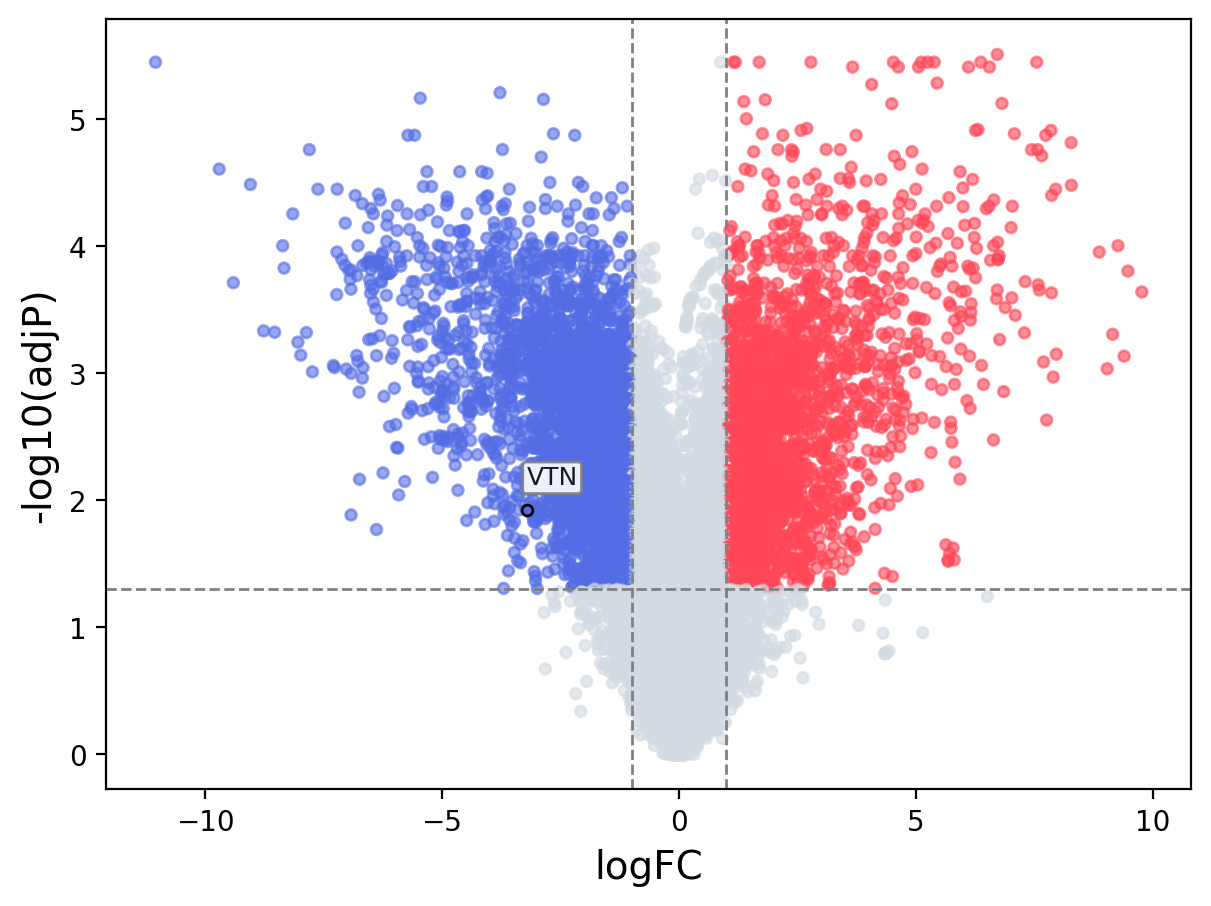
When the query gene is differentially changed in the dataset, a volcano/bar plot will be displayed.
> Dataset: GSE100400 - VTN expression across samples
|
Volcano Plot
|
Bar Plot
|
|
|
 HBV Target gene Detail Information
