|
Dataset Information
| Accession |
GSE252863
|
| Status |
2024/1/14 |
| Title |
Liver-restricted Type I Interferon Signature Precedes Liver Damage in Chronic Hepatitis B Patients Stopping Antiviral Therapy |
| Organism |
Homo sapiens |
| Experiment type |
Expression profiling by high throughput sequencing |
| Summary |
Immune-mediated liver damage is the driver of disease progression in patients with chronic Hepatitis B virus (HBV) infection. Liver damage is an antigen-independent process caused by bystander activation of CD8 T cells and NK cells. How bystander lymphocyte activation is initiated in chronic hepatitis B (CHB) patients remains unclear. Periods of liver damage, called hepatic flares, occur unpredictably, making early events difficult to capture. To address this obstacle, we longitudinally sampled the liver of CHB patients stopping antiviral therapy and analyzed immune composition and activation using flow cytometry and single-cell RNA sequencing (scRNA-seq). At 4 weeks after stopping therapy, HBV replication rebounded but no liver damage was detectable. There were no changes in cell frequencies at viral rebound. ScRNA-seq revealed upregulation of IFN stimulated genes (ISGs) and pro-inflammatory cytokine MIF at viral rebound in patients that go on to develop hepatic flares 6 – 18 w after stopping therapy. The type I IFN signature was only detectable within the liver and neither IFN-α/β or ISG induction could be detected in the peripheral blood. In vitro experiments confirmed the type I IFN-dependent ISG profile whereas MIF was induced primarily by IL-12. MIF exposure further amplified inflammatory cytokine production by myeloid cells. Our data show that innate immune activation is detectable in the liver before clinically significant liver damage is evident. The combination of type I IFN and enhanced cytokine production upon MIF exposure represent the earliest immunological triggers of lymphocyte bystander activation observed in hepatic flares associated with chronic HBV infection. |
| Samples |
| GSM ID |
Sample info |
Characteristics |
Description |
|
GSM8009021
|
liver, patient3, week 4 |
tissue:liver; subject id:patient3; time point:week 4 |
barcodes.tsv.gz;genes.tsv.gz;matrix.mtx.gz;Seurat_metadata.tsv |
|
GSM8009022
|
liver, patient4, week 0 |
tissue:liver; subject id:patient4; time point:week 0 |
barcodes.tsv.gz;genes.tsv.gz;matrix.mtx.gz;Seurat_metadata.tsv |
|
GSM8009023
|
liver, patient4, week 4 |
tissue:liver; subject id:patient4; time point:week 4 |
barcodes.tsv.gz;genes.tsv.gz;matrix.mtx.gz;Seurat_metadata.tsv |
|
GSM8009024
|
liver, patient5, week 0 |
tissue:liver; subject id:patient5; time point:week 0 |
barcodes.tsv.gz;genes.tsv.gz;matrix.mtx.gz;Seurat_metadata.tsv |
|
GSM8009025
|
liver, patient5, week 4 |
tissue:liver; subject id:patient5; time point:week 4 |
barcodes.tsv.gz;genes.tsv.gz;matrix.mtx.gz;Seurat_metadata.tsv |
|
GSM8009016
|
liver, patient1, week 0 |
tissue:liver; subject id:patient1; time point:week 0 |
barcodes.tsv.gz;genes.tsv.gz;matrix.mtx.gz;Seurat_metadata.tsv |
|
GSM8009017
|
liver, patient1, week 4 |
tissue:liver; subject id:patient1; time point:week 4 |
barcodes.tsv.gz;genes.tsv.gz;matrix.mtx.gz;Seurat_metadata.tsv |
|
GSM8009019
|
liver, patient2, week 4 |
tissue:liver; subject id:patient2; time point:week 4 |
barcodes.tsv.gz;genes.tsv.gz;matrix.mtx.gz;Seurat_metadata.tsv |
|
GSM8009018
|
liver, patient2, week 0 |
tissue:liver; subject id:patient2; time point:week 0 |
barcodes.tsv.gz;genes.tsv.gz;matrix.mtx.gz;Seurat_metadata.tsv |
|
GSM8009020
|
liver, patient3, week 0 |
tissue:liver; subject id:patient3; time point:week 0 |
barcodes.tsv.gz;genes.tsv.gz;matrix.mtx.gz;Seurat_metadata.tsv |
|
| Platform |
GPL16791 : Illumina HiSeq 2500 (Homo sapiens) |
| Literature |
|
| Download |
Download scRNA Analysis Data
|
|
scRNA-seq UMAP
|
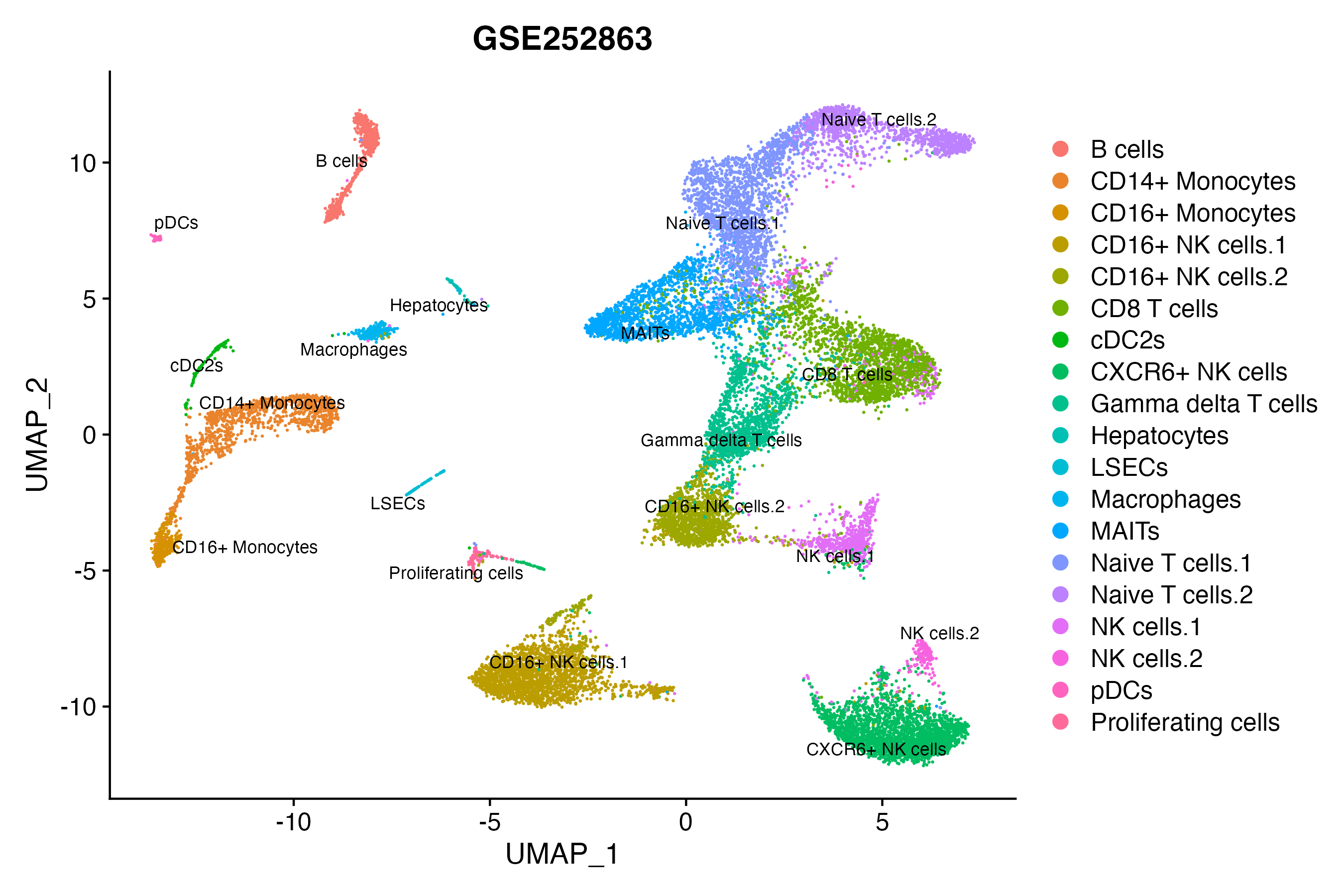
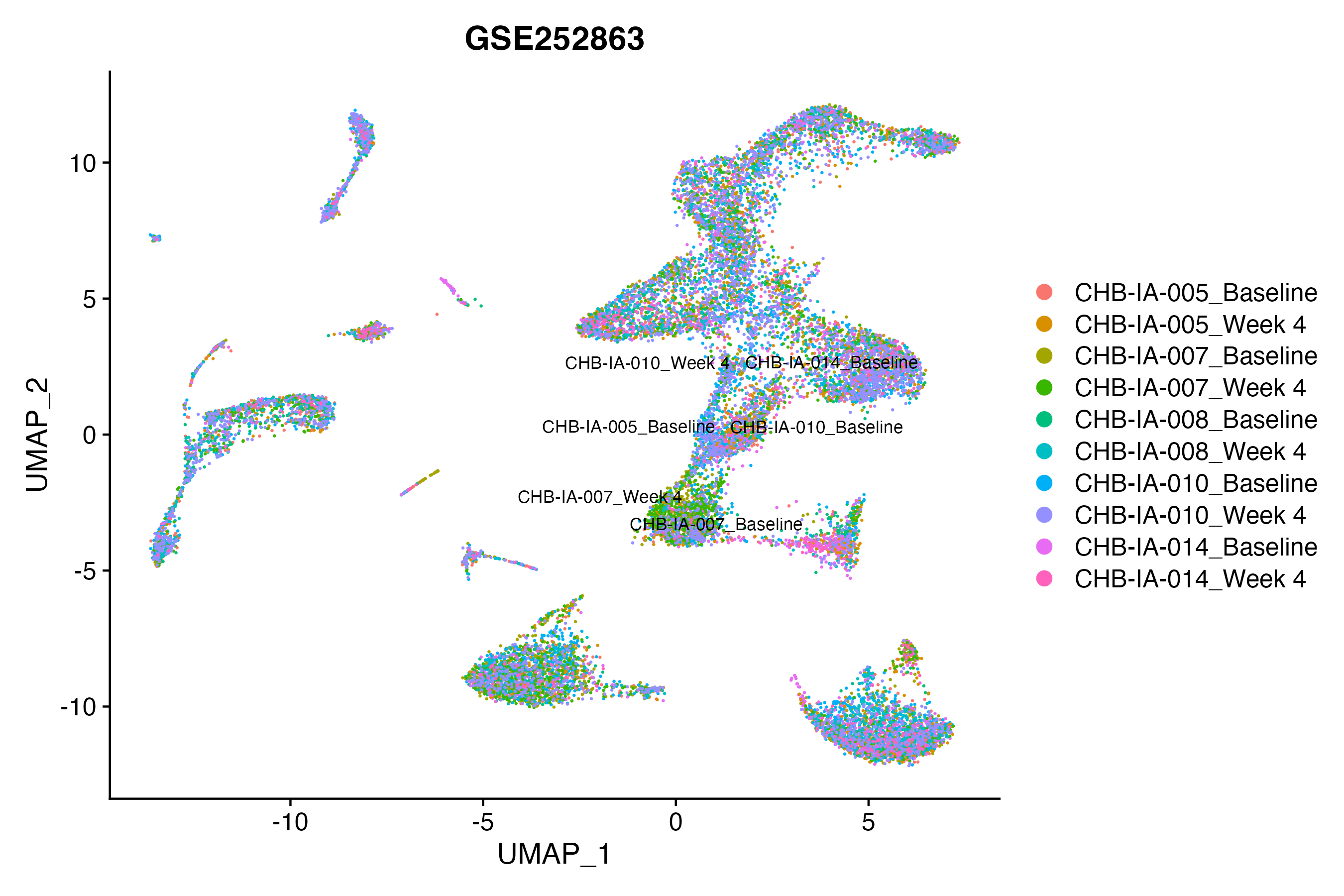
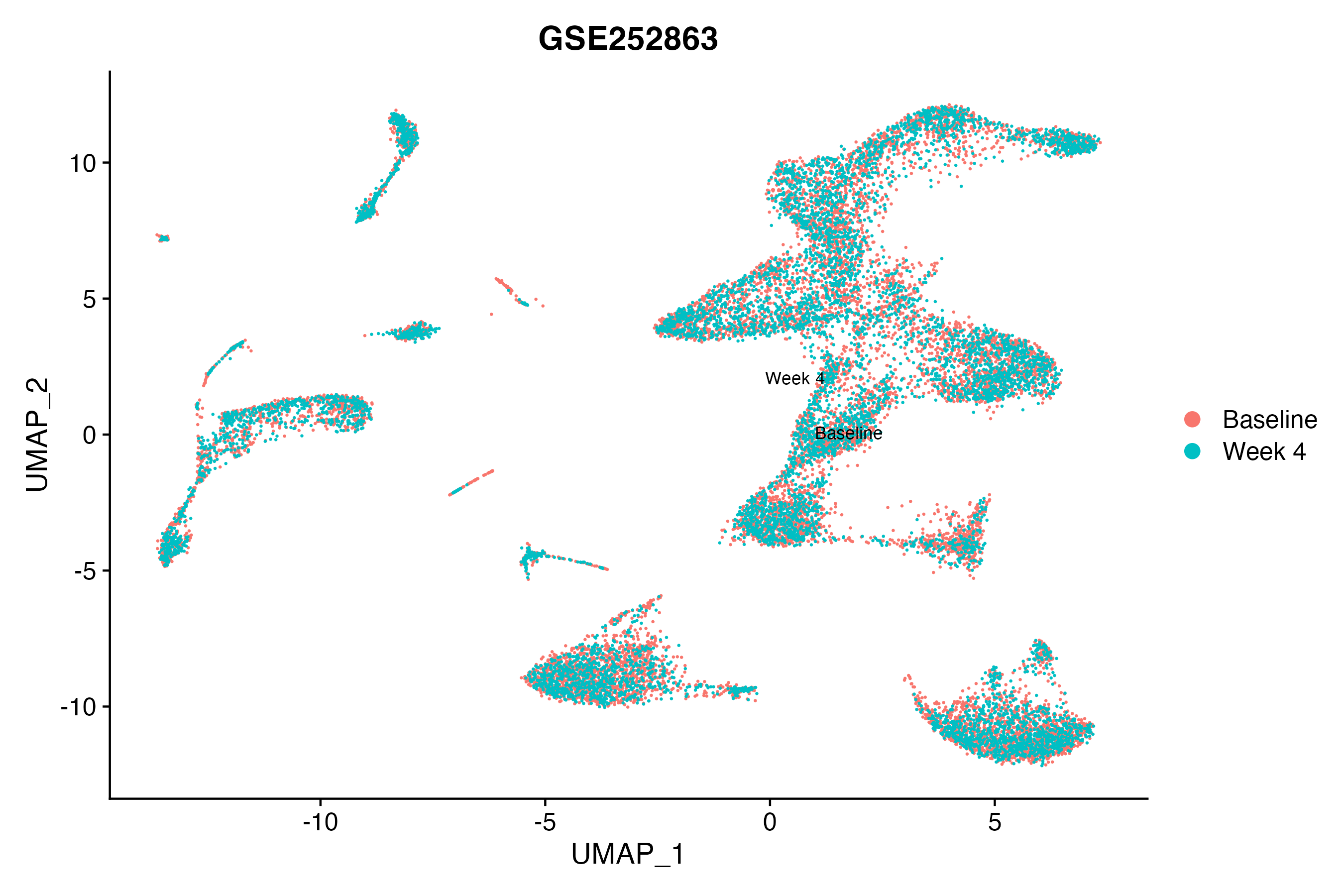
|
|
 Virus Dataset Detail
