|
Basic Characteristics of Mutations
|
|
Mutation Site
|
V229I |
|
Mutation Site Sentence
|
E2-R82G, E2-L210Q, E2-I211T, E2-V229I and E2-S375T which had various adaptive roles during the evolution of CHIKV. |
|
Mutation Level
|
Amino acid level |
|
Mutation Type
|
Nonsynonymous substitution |
|
Gene/Protein/Region
|
E2 |
|
Standardized Encoding Gene
|
E2
|
|
Genotype/Subtype
|
ECSA |
|
Viral Reference
|
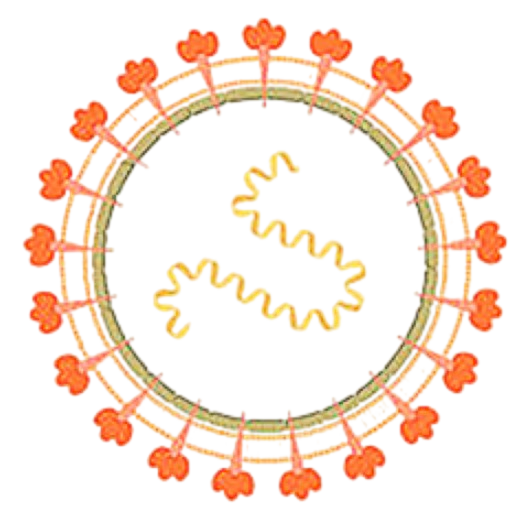
Fig. 1
|
|
Functional Impact and Mechanisms
|
|
Disease
|
Chikungunya Fever
|
|
Immune
|
- |
|
Target Gene
|
-
|
|
Clinical and Epidemiological Correlations
|
|
Clinical Information
|
- |
|
Treatment
|
- |
|
Location
|
India |
|
Literature Information
|
|
PMID
|
23684629
|
|
Title
|
Genetic characterization of E2 region of Chikungunya virus circulating in Odisha, Eastern India from 2010 to 2011
|
|
Author
|
Sahu A,Das B,Das M,Patra A,Biswal S,Kar SK,Hazra RK
|
|
Journal
|
Infection, genetics and evolution : journal of molecular epidemiology and evolutionary genetics in infectious diseases
|
|
Journal Info
|
2013 Aug;18:113-24
|
|
Abstract
|
Chikungunya virus (CHIKV) infection has caught attention yet again as it rages around the globe affecting millions of people. The virus caused epidemic outbreaks affecting more than 15,000 people in Odisha, Eastern India since 2010. In this study, complete genetic characterization of E2 gene of CHIKV circulating in Odisha from 2010 to 2011 was performed by virus isolation, RT-PCR, molecular phylogenetics and bioinformatics methods. Phylogenetic analyses revealed the circulation of Indian Ocean Lineage (IOL) strains of ECSA genotype of CHIKV in Odisha. Several mutations were detected in the E2 gene, viz. E2-R82G, E2-L210Q, E2-I211T, E2-V229I and E2-S375T which had various adaptive roles during the evolution of CHIKV. The CHIKV E2 peptide (5)(7)KTDDSHD(6)(3) was predicted to be the most probable T-cell epitope and peptide (8)(4)FVRTSAPCT(9)(2) predicted to be the common T and B cell epitope having high antigenicity. The amino acid positions 356-379 and 365-385 were predicted to be transmembrane helical domains and indicated E2 protein anchorage in intracellular membranes for effective interaction with the host receptors. Positive selection pressure was observed in five specific sites, 210, 211, 318, 375, and 377 which were observed to be fixed advantageously in most viral isolates. Structural modeling revealed that E2 gene of CHIKV was composed of 3 domains and the major adaptive mutations were detected in domain B, which can modulate binding of CHIKV to host cells, while the transmembrane domain in domain C and the epitopes were located in domain A, which was found to be most conserved. This is the first report from Eastern India demonstrating a predictive approach to the genetic variations, epitopic regions and the transmembrane helices of the E2 region. The results of this study, combined with other published observations, will expand our knowledge about the E2 region of CHIKV which can be exploited to develop control measures against CHIKV.
|
|
Sequence Data
|
-
|
|
|