|
Basic Characteristics of Mutations
|
|
Mutation Site
|
V368A |
|
Mutation Site Sentence
|
This was further supported by changes in specific amino acids, E2-V368A and 6K-L20M. |
|
Mutation Level
|
Amino acid level |
|
Mutation Type
|
Nonsynonymous substitution |
|
Gene/Protein/Region
|
E2 |
|
Standardized Encoding Gene
|
E2
|
|
Genotype/Subtype
|
Asian |
|
Viral Reference
|
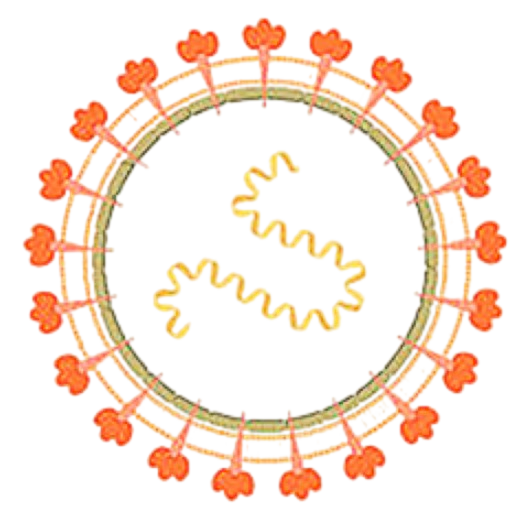
Fig. 1
|
|
Functional Impact and Mechanisms
|
|
Disease
|
Chikungunya Fever
|
|
Immune
|
- |
|
Target Gene
|
-
|
|
Clinical and Epidemiological Correlations
|
|
Clinical Information
|
- |
|
Treatment
|
- |
|
Location
|
- |
|
Literature Information
|
|
PMID
|
26781948
|
|
Title
|
Identification of Asian genotype of chikungunya virus isolated in Mexico
|
|
Author
|
Diaz-Quinonez JA,Escobar-Escamilla N,Ortiz-Alcantara J,Vazquez-Pichardo M,de la Luz Torres-Rodriguez M,Nunez-Leon A,Torres-Longoria B,Lopez-Martinez I,Ruiz-Matus C,Kuri-Morales P,Ramirez-Gonzalez JE
|
|
Journal
|
Virus genes
|
|
Journal Info
|
2016 Feb;52(1):127-9
|
|
Abstract
|
We identified 25 autochthonous chikungunya virus cases in Mexico, initially detected by RT-PCR targeting the E1 gene and propagated in C6/36 Aedes albopictus cells, in 2014. To determine the type of virus found, in a previous report, the genomes of 2 CHIKV strains were fully sequenced. Genome sequence analysis revealed that these isolates from Mexico belonged to the Asian genotype, and a phylogenetic association with the circulating strain in the British Virgin Islands was also established in the same year. This was further supported by changes in specific amino acids, E2-V368A and 6K-L20M. For these reasons, it can be inferred that the route of virus entry to Mexico was held across the countries in the Caribbean and Central America. The presence of E1-A226V mutation associated with more efficient replication in the salivary gland of the A. albopictus mosquito was not observed. Interestingly, a newly acquired NSP4-S399C mutation was observed; however, the significance of changes in amino acid found in non-structural proteins in autochthonous strains remains to be elucidated.
|
|
Sequence Data
|
-
|
|
|