Virus Dataset Detail

> Detail information for each sample

Dataset Information
Accession GSE120375
Status 2023/12/21
Title Global gene expression analysis of CD14+ monocytes and CD4+ effector memory T cells before and during fingolimod treatment
Organism Homo sapiens
Experiment type Expression profiling by high throughput sequencing
Summary Treatment of multiple sclerosis (MS) patients with sphingosine-1-phosphate receptor agonist fingolimod (FTY) increases for unknown reasons the risk for symptomatic reactivation of alpha-herpesviruses, in particular of varicella zoster virus (VZV), but not of other co-infecting herpesviruses (e.g. human cytomegalovirus (HCMV). To elucidate this specific signal in adverse events, we systematically assessed changes in global and herpesvirus-specific immune responses and signatures in MS patients before and during FTY therapy. In addition to phenotypical and functional changes, we thought to identify FTY-induced modifications on the gene expression level, which might add to perturbations in antiviral immune responses. Therefore, gene expression of CD4+ EM T cells and CD14+ monocytes were analyzed. These two subsets, CD4+ EM T cells and CD14+ monocytes, were isolated from PBMC of six female RRMS patients collected before (V0) and after 9 months of FTY therapy (V9) for RNA sequencing (RNASeq). Comparison of gene expression profiles of monocytes between V0 and V9 revealed 226 down- and 38 upregulated genes. Gene ontology categories and pathway analysis detected most significant alterations for genes involved in immune response, defense against viruses as well as type-1 interferon signaling pathways. Next, we compared gene expression profiles of CD4+ EM T cells collected at V0 and V9 of FTY therapy and found 314 down- and 219 upregulated genes. The most significantly modified pathways were involved in immune responses, including NK cell chemotaxis, cytotoxicity and antiviral responses. In summary, gene expression analysis of monocytes suggests that HCMV might be more susceptible to reactivation during FTY treatment because of FTY-induced modifications of immune control pathways important for HCMV latency. However, increased cytolytic potential of CD4+ EM T cells and expansion of HCMV-specific CD4+ T cells might counteract synthesis or release of viral particles and prevent viremia.
Samples
GSM ID Sample info Characteristics Description
GSM3399446 L36_MONOS_V0 condition:Before Fingolimod therapy -
GSM3399447 L36_MONOS_V9 condition:After Fingolimod therapy -
GSM3399448 L41_MONOS_V0 condition:Before Fingolimod therapy -
GSM3399449 L41_MONOS_V9 condition:After Fingolimod therapy -
GSM3399450 L43_MONOS_V0 condition:Before Fingolimod therapy -
GSM3399451 L43_MONOS_V9 condition:After Fingolimod therapy -
GSM3399452 L46_MONOS_V0 condition:Before Fingolimod therapy -
GSM3399453 L46_MONOS_V9 condition:After Fingolimod therapy -
GSM3399454 L50_MONOS_V0 condition:Before Fingolimod therapy -
GSM3399455 L50_MONOS_V9 condition:After Fingolimod therapy -
GSM3399456 L56_MONOS_V0 condition:Before Fingolimod therapy -
GSM3399457 L56_MONOS_V9 condition:After Fingolimod therapy -
GSM3399458 L36_V0_CD4_EM condition:Before Fingolimod therapy -
GSM3399459 L36_V9_CD4_EM condition:After Fingolimod therapy -
GSM3399460 L41_V0_CD4_EM condition:Before Fingolimod therapy -
GSM3399461 L41_V9_CD4_EM condition:After Fingolimod therapy -
GSM3399462 L43_V0_CD4_EM condition:Before Fingolimod therapy -
GSM3399463 L43_V9_CD4_EM condition:After Fingolimod therapy -
GSM3399464 L46_V0_CD4_EM condition:Before Fingolimod therapy -
GSM3399465 L46_V9_CD4_EM condition:After Fingolimod therapy -
GSM3399466 L50_V0_CD4_EM condition:Before Fingolimod therapy -
GSM3399467 L50_V9_CD4_EM condition:After Fingolimod therapy -
GSM3399468 L56_V0_CD4_EM condition:Before Fingolimod therapy -
GSM3399469 L56_V9_CD4_EM condition:After Fingolimod therapy -
Platform GPL16791  : Illumina HiSeq 2500 (Homo sapiens)
Literature   
Download Download xCell Data  Download Expression Analysis Data  
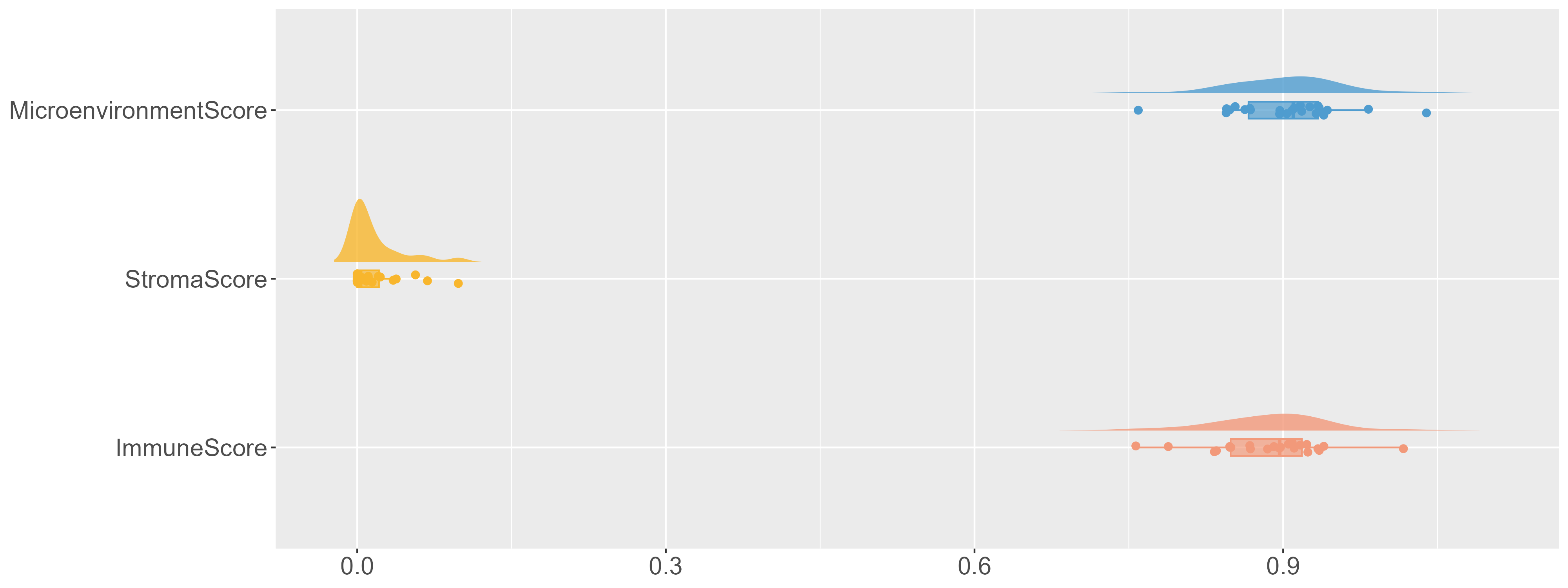
xCell Plot
* p<0.05 ** p<0.01