|
Dataset Information
| Accession |
GSE227709
|
| Status |
2023/4/1 |
| Title |
STING agonism leads to durable clinical response in an anti-PD-L1 refractory patient: Tumor antigen-specific, single cell level biomarker analyses |
| Organism |
Homo sapiens |
| Experiment type |
Other |
| Summary |
Background: PD-1 pathway blockade has revolutionized cancer care, but many patients do not durably benefit from these therapies. Novel treatments to engage anti-tumor immunity in this setting are needed. The stimulator of interferon genes (STING) protein, an innate sensor of cytoplasmic DNA, is a promising target with several agonists in development; however, recent clinical trials of these agents have not demonstrated efficacy for most patients. Here, we present detailed biomarker analyses of a patient with anti-PD-L1 refractory Merkel cell carcinoma that had a durable (~1 year), abscopal response to ADU-S100 (intralesional STING agonist) combined with anti-PD-1 blockade.
Methods: Tumor biopsies and peripheral blood acquired pre- and post-treatment were analyzed with single cell RNA sequencing, 27-color flow cytometry, T cell receptor sequencing and multiplexed immunohistochemistry (mIHC; post treatment tumor specimen only). Critically, cancer-specific CD8 T cells were identified using MHC-I tetramers containing peptides from the Merkel cell polyomavirus (MCPyV), the etiologic agent of this cancer. Cell lines and tumor specimens from 76 patients were used to evaluate STING expression and signaling in MCC.
Results: High levels of antigen cancer-specific T cells were observed in the tumor prior to ADU-S100 treatment (12% of T cells recognized an MCPyV epitope). These cancer-specific CD8 T cells exhibited characteristics of exhaustion including high TOX and low TCF1. Following STING agonist treatment, MCPyV-specific CD8 T cells expanded 3-fold with minimal phenotypic changes. An increase in antigen presentation on MCC tumor cells was also observed (1.8% of tumor cells MHC-I positive before treatment, 8.2% after treatment). This was not a result of ADU-S100 acting directly on tumor cells as mIHC analysis of 88 tumor samples confirmed little or no STING expression in tumor cells, but high STING expression on infiltrating immune and stromal cells. Further in vitro studies showed MCPyV-positive MCC cell lines are STING deficient, and ADU-S100 did not induce interferon.
Conclusions: Our study suggests that STING agonists act on intratumoral immune cells to release interferons, which upregulate tumor cell antigen presentation and reinvigorate the anti-tumor response from pre-existing cancer-specific T cells. Thus, patients with anti-PD-(L)1-refractory disease showing downregulation of antigen-presentation may benefit from intralesional STING agonists. |
| Samples |
| GSM ID |
Sample info |
Characteristics |
Description |
|
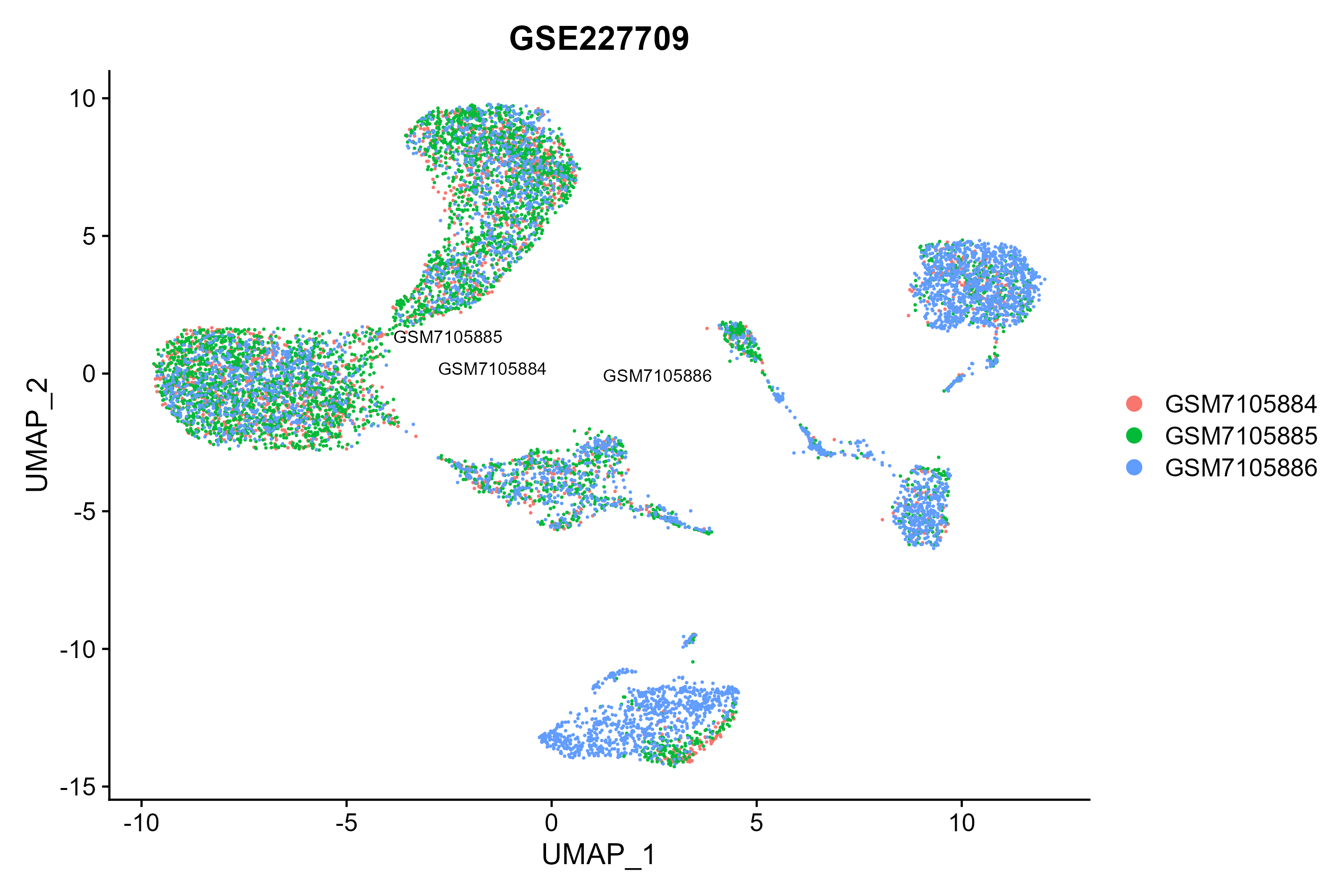
GSM7105884
|
Gene expression and antibody derived tags replicate 1 |
tissue:Tumor & Blood; cell type:T cells expanded with phytohemagglutinin-purified mitogen, IL2 and IL15; library type:GEX/ADT |
Antibody or MHC multimer-derived oligonucleotide (ADT);Z1471A_GEX |
|
GSM7105885
|
Gene expression and antibody derived tags replicate 2 |
tissue:Tumor & Blood; cell type:T cells expanded with phytohemagglutinin-purified mitogen, IL2 and IL15; library type:GEX/ADT |
Antibody or MHC multimer-derived oligonucleotide (ADT);Z1471B_GEX |
|
GSM7105886
|
Gene expression and antibody derived tags replicate 3 |
tissue:Tumor & Blood; cell type:T cells expanded with phytohemagglutinin-purified mitogen, IL2 and IL15; library type:GEX/ADT |
Antibody or MHC multimer-derived oligonucleotide (ADT);Z1471C_GEX |
|
GSM7105887
|
T cell receptor single cell library replicate 1 |
tissue:Tumor & Blood; cell type:T cells expanded with phytohemagglutinin-purified mitogen, IL2 and IL15; library type:TCR |
V(D)J TCR library;Z1471A_TCR |
|
GSM7105888
|
T cell receptor single cell library replicate 2 |
tissue:Tumor & Blood; cell type:T cells expanded with phytohemagglutinin-purified mitogen, IL2 and IL15; library type:TCR |
V(D)J TCR library;Z1471B_TCR |
|
GSM7105889
|
T cell receptor single cell library replicate 3 |
tissue:Tumor & Blood; cell type:T cells expanded with phytohemagglutinin-purified mitogen, IL2 and IL15; library type:TCR |
V(D)J TCR library;Z1471C_TCR |
|
| Platform |
GPL24676 : Illumina NovaSeq 6000 (Homo sapiens) |
| Literature |
38340723 |
| Download |
Download scRNA Analysis Data
|
|
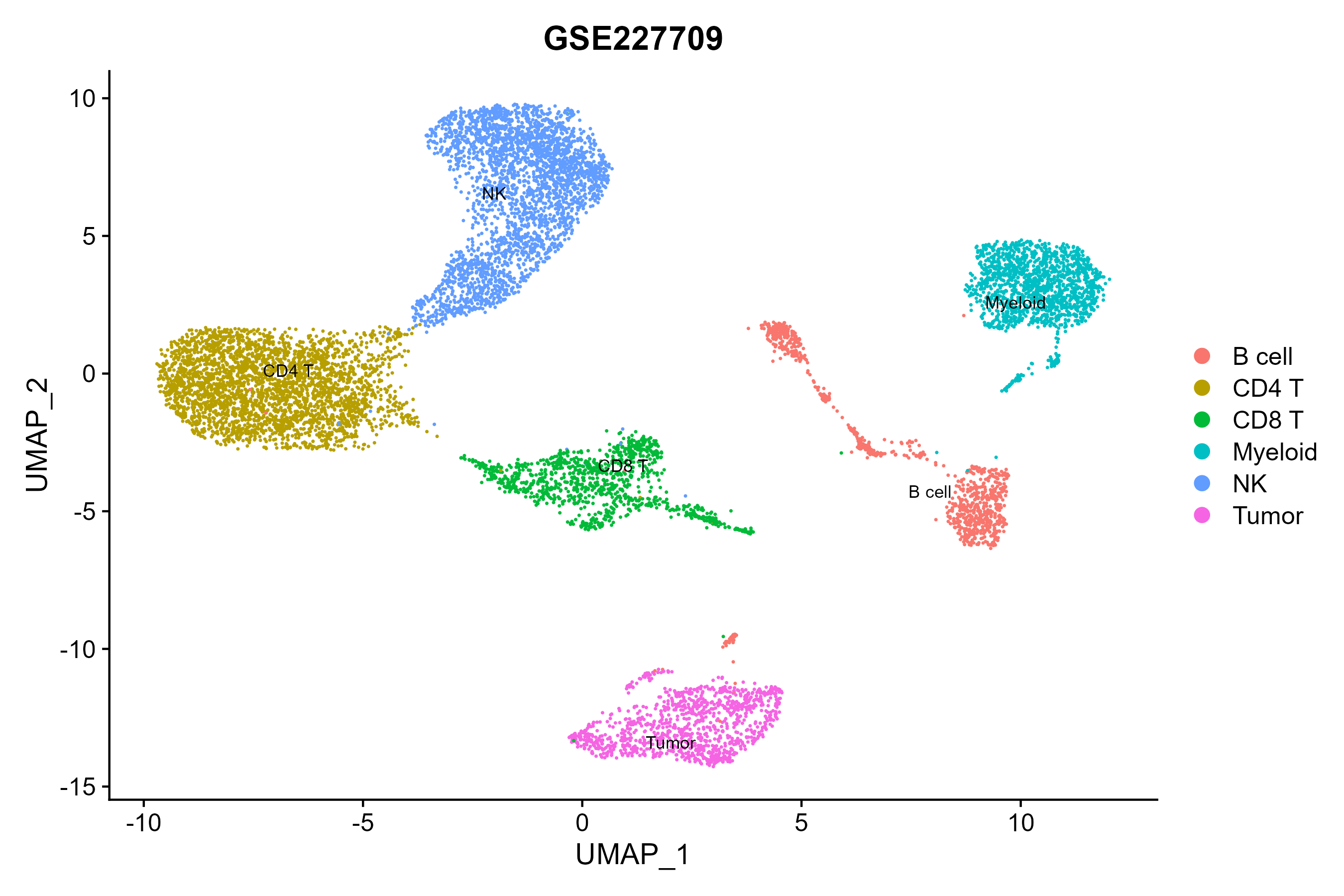
scRNA-seq UMAP
|
|
|
 Virus Dataset Detail
