Virus Dataset Detail

> Detail information for each sample

Dataset Information
Accession GSE232843
Status 2023/8/8
Title Prolonged Kaposi's Sarcoma-associated Herpesvirus vIL-6 Exposure Enhances Inflammatory Responses by Epigenetic Reprogramming (RNA-seq)
Organism Homo sapiens
Experiment type Expression profiling by high throughput sequencing
Summary Kaposi sarcoma-associated herpesvirus (KSHV) inflammatory cytokine syndrome (KICS) is a newly described chronic inflammatory disease condition caused by KSHV infection and is characterized by high KSHV viral load and sustained elevations of serum KSHV-encoded IL-6 (vIL-6) and human IL-6 (hIL-6). KICS has significant immortality and possesses greater risks of having other complications, which include malignancies. Although prolonged inflammatory vIL-6 exposure by persistent KSHV infection is expected to have key roles in subsequent disease development, the biological effects of prolonged vIL-6 exposure remain elusive. Using thiol(SH)-Linked Alkylation for the Metabolic Sequencing (SLAM-seq) and Cleavage Under Target & Release Using Nuclease (CUT&RUN) analysis, we studied the effect of prolonged vIL-6 exposure in chromatin landscape and resulting cytokine production. The studies showed that prolonged vIL-6 exposure increased Bromodomain containing 4 (BRD4) and histone H3 lysine 27 acetylation (H3K27Ac) co-occupancies on chromatin, and the recruitment sites were frequently co-localized with poised RNA polymerase II with associated enzymes. Increased BRD4 recruitment on promoters was associated with increased and prolonged p65 (RelA) binding after the LPS stimulation. The p65 binding resulted in quicker and sustained transcription bursts from the promoters; this mechanism increased total amounts of hIL-6 and IL-10 in tissue culture. Pretreatment with the BRD4 inhibitor, OTX015, eliminated the enhanced inflammatory cytokine production. These findings suggest that persistent vIL-6 exposure may establish a chromatin landscape favorable for the reactivation of inflammatory responses in monocytes. This epigenetic memory may explain the greater risk of chronic inflammatory disease development in KSHV-infected individuals.
Samples
GSM ID Sample info Characteristics Description
GSM7384445 LoS_1 cell line:THP-1; cell type:monocyte; treatment:No treatment; treatment:mock infection -
GSM7384446 LoS_2 cell line:THP-1; cell type:monocyte; treatment:No treatment; treatment:mock infection -
GSM7384447 LoS_3 cell line:THP-1; cell type:monocyte; treatment:No treatment; treatment:mock infection -
GSM7384448 LoS_r219_1 cell line:THP-1; cell type:monocyte; treatment:No treatment; treatment:r219.KSHV infection -
GSM7384449 LoS_r219_2 cell line:THP-1; cell type:monocyte; treatment:No treatment; treatment:r219.KSHV infection -
GSM7384450 LoS_r219_3 cell line:THP-1; cell type:monocyte; treatment:No treatment; treatment:r219.KSHV infection -
GSM7384451 vIL6_THP1_1 cell line:vIL-6/THP-1; cell type:monocyte; treatment:vIL-6 (100 ng/ml), continuous for 2 weeks; treatment:mock infection -
GSM7384452 vIL6_THP1_2 cell line:vIL-6/THP-1; cell type:monocyte; treatment:vIL-6 (100 ng/ml), continuous for 2 weeks; treatment:mock infection -
GSM7384453 vIL6_THP1_3 cell line:vIL-6/THP-1; cell type:monocyte; treatment:vIL-6 (100 ng/ml), continuous for 2 weeks; treatment:mock infection -
GSM7384454 vIL6_THP1_r219_1 cell line:vIL-6/THP-1; cell type:monocyte; treatment:vIL-6 (100 ng/ml), continuous for 2 weeks; treatment:r219.KSHV infection -
GSM7384455 vIL6_THP1_r219_2 cell line:vIL-6/THP-1; cell type:monocyte; treatment:vIL-6 (100 ng/ml), continuous for 2 weeks; treatment:r219.KSHV infection -
GSM7384456 vIL6_THP1_r219_3 cell line:vIL-6/THP-1; cell type:monocyte; treatment:vIL-6 (100 ng/ml), continuous for 2 weeks; treatment:r219.KSHV infection -
Platform GPL24676  : Illumina NovaSeq 6000 (Homo sapiens)
Literature 37503036  
Download Download xCell Data  Download Expression Analysis Data  
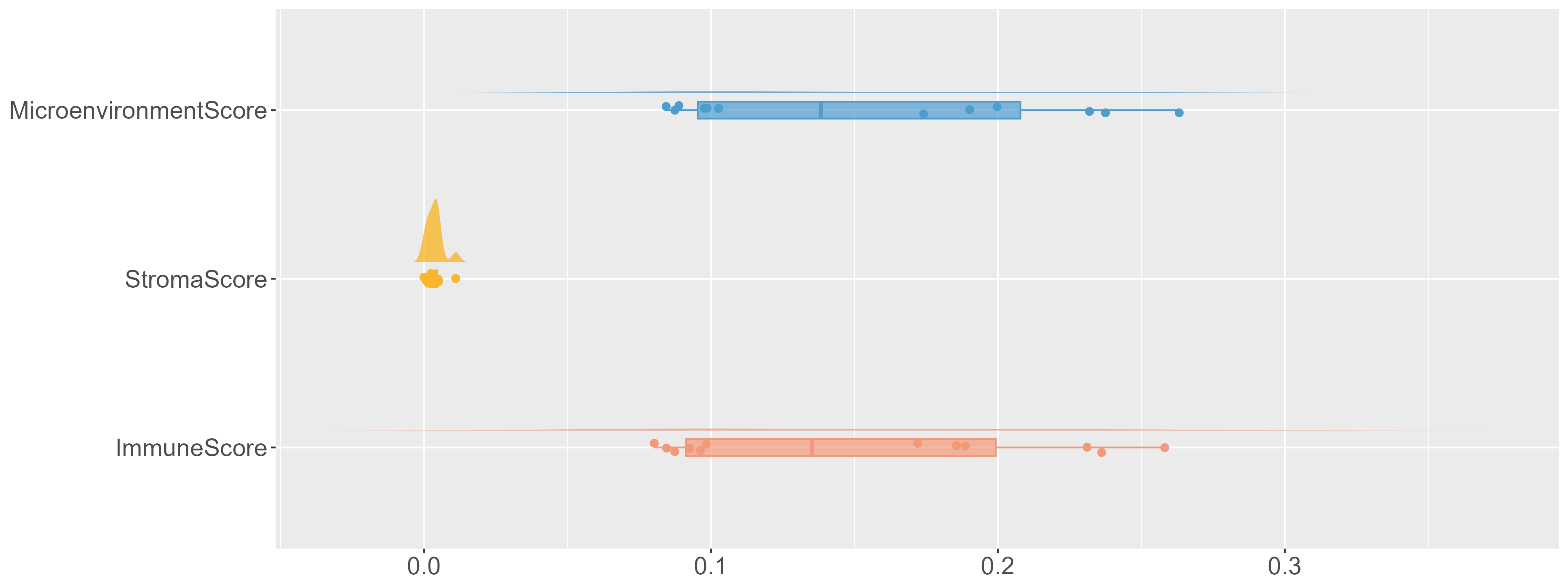
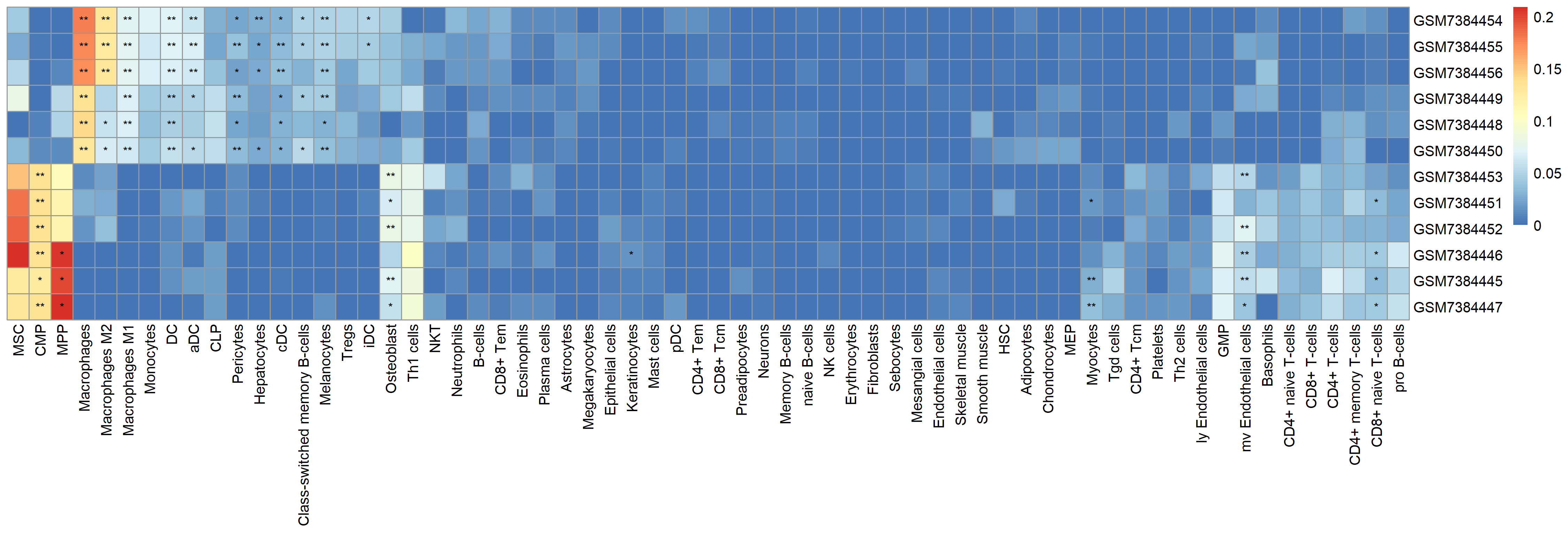
xCell Plot
* p<0.05 ** p<0.01