Virus Dataset Detail

> Detail information for each sample

Dataset Information
Accession GSE79029
Status 2016/12/21
Title KSHV Infection Mimics the Hypoxic Response Based on Next-Generation Sequencing [mRNA-Seq]
Organism Homo sapiens
Experiment type Expression profiling by high throughput sequencing
Summary Purpose: Kaposi’s sarcoma associated-herpesvirus (KSHV) causes several hyperproliferative disorders, including Kaposi’s sarcoma, primary effusion lymphoma and multicentric Castleman’s disease. KSHV encodes for a number of microRNAs (miRNAs), and KSHV infection can affect the expression of cellular miRNAs. Hypoxia has been shown to induce KSHV reactivation, directly induce several KSHV lytic genes, and also induce the most abundant latent viral protein, LANA. Also, several KSHV proteins can stabilize and increase the cellular levels of hypoxia-inducible factor (HIF-1α). However, the degree to which hypoxic pathways are utilized by KSHV has yet to be determined. Methods: We investigated the interplay between hypoxia and KSHV infection by comparing the 31effects of hypoxia and KSHV infection on miRNA and mRNA expression, and by examining the 32effects of hypoxia on uninfected and KSHV-infected cells. This was accomplished using next-33generation sequencing (NGS), qRT-PCR, Taqman assays, and pathway analysis. Results: NGS analysis of human mRNAs revealed striking similarities (~34%) between the transcriptomic response to hypoxia and the transcriptomic response to KSHV infection. Additionally, hsa-miR-210, a key hypoxia-inducible miRNA with pro-angiogenic and anti-apoptotic properties, was found significantly up-regulated by both KSHV infection and hypoxia using Taqman assays. Finally, KSHV infected cells differed somewhat in their response to hypoxia compared to KSHV-uninfected controls. Conclusions: These results demonstrate that KSHV harnesses a part of the hypoxic cellular response and induces miR-210 up-regulation. The understanding of how these miRNAs, genes and pathways are regulated by HIF-1α and KSHV infection are essential to a better understanding of the biology of KSHV-associated diseases.
Samples
GSM ID Sample info Characteristics Description
GSM2084198 SLK_hypoxia_polyA_mRNAseq_rep1 [mRNA] infection status: Not infected;oxygen concentration: Hypoxia (1% O2 for 24hrs);cell type: SLK cells Total RNA containing short RNA fraction; DNase treated; polyA enriched fraction
GSM2084199 SLK_hypoxia_polyA_mRNAseq_rep2 [mRNA] infection status: Not infected;oxygen concentration: Hypoxia (1% O2 for 24hrs);cell type: SLK cells Total RNA containing short RNA fraction; DNase treated; polyA enriched fraction
GSM2084200 SLK_hypoxia_polyA_mRNAseq_rep3 [mRNA] infection status: Not infected;oxygen concentration: Hypoxia (1% O2 for 24hrs);cell type: SLK cells Total RNA containing short RNA fraction; DNase treated; polyA enriched fraction
GSM2084201 SLKK_hypoxia_polyA_mRNAseq_rep1 [mRNA] infection status: Chronically KSHV-infected (Human herpesvirus 8);oxygen concentration: Hypoxia (1% O2 for 24hrs);cell type: SLKK cells Total RNA containing short RNA fraction; DNase treated; polyA enriched fraction
GSM2084202 SLKK_hypoxia_polyA_mRNAseq_rep2 [mRNA] infection status: Chronically KSHV-infected (Human herpesvirus 8);oxygen concentration: Hypoxia (1% O2 for 24hrs);cell type: SLKK cells Total RNA containing short RNA fraction; DNase treated; polyA enriched fraction
GSM2084203 SLKK_hypoxia_polyA_mRNAseq_rep3 [mRNA] infection status: Chronically KSHV-infected (Human herpesvirus 8);oxygen concentration: Hypoxia (1% O2 for 24hrs);cell type: SLKK cells Total RNA containing short RNA fraction; DNase treated; polyA enriched fraction
Platform GPL11154  : Illumina HiSeq 2000 (Homo sapiens)
Literature 28046107  
Download Download xCell Data  Download Expression Analysis Data  
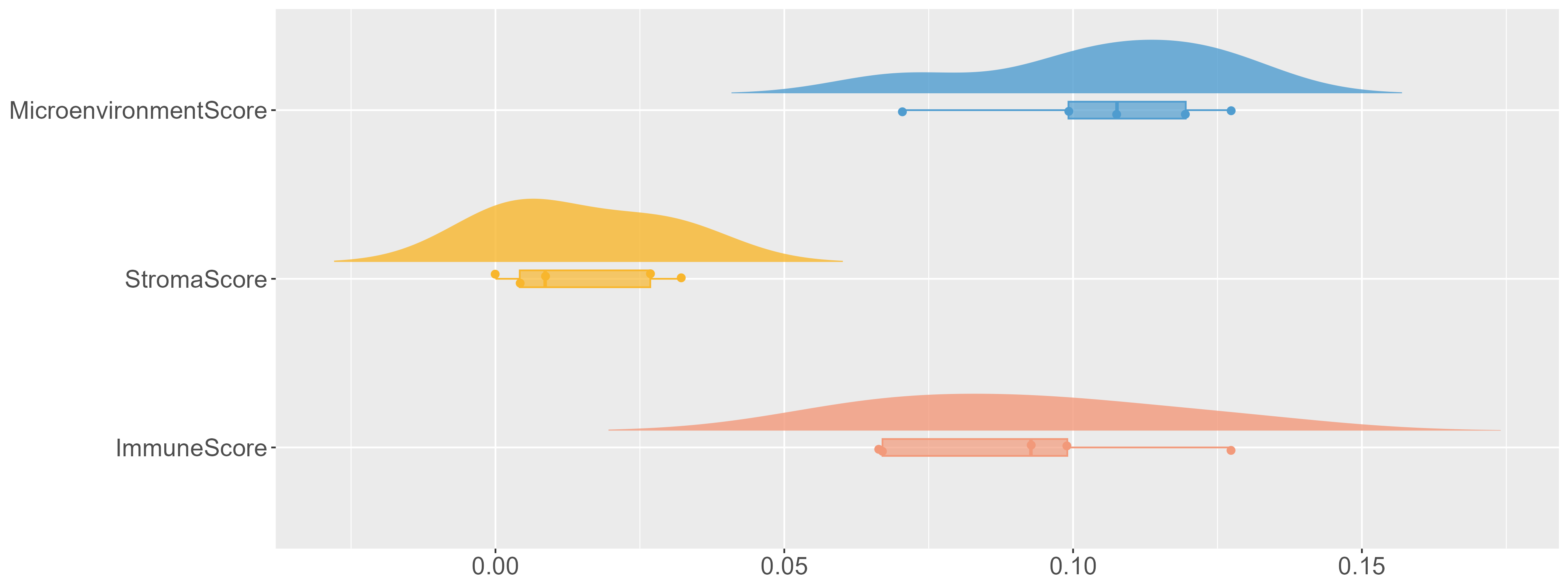
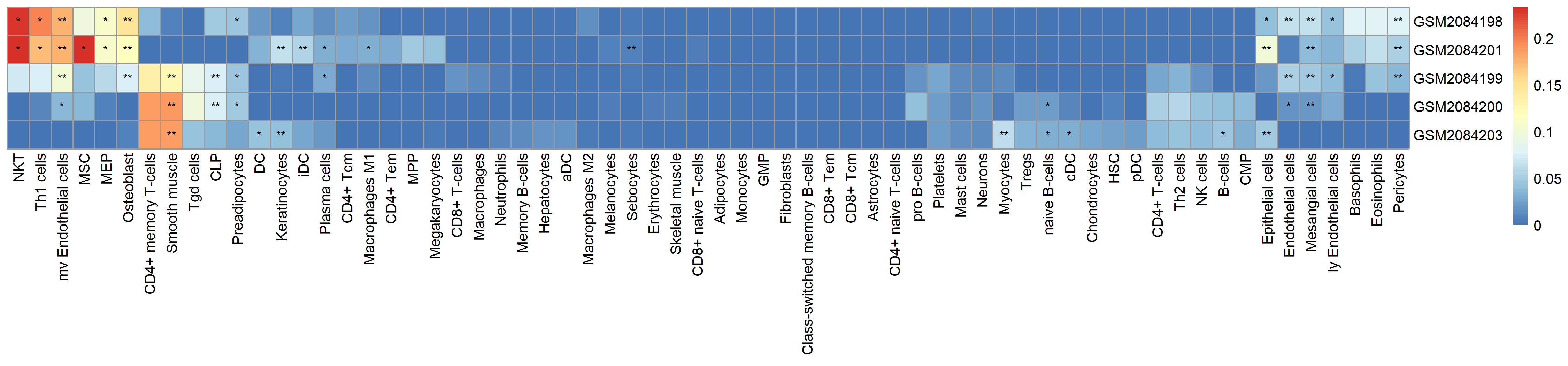
xCell Plot
* p<0.05 ** p<0.01